Structural Drying and Dehumidification in La Vista, NE
A surface can look dry while the framing, subfloor and concrete behind it stay wet. In La Vista homes, the drying team matches equipment to the class of loss and keeps it running until readings, not the calendar, show a dry structure.
(888) 664-3027Get the structure dried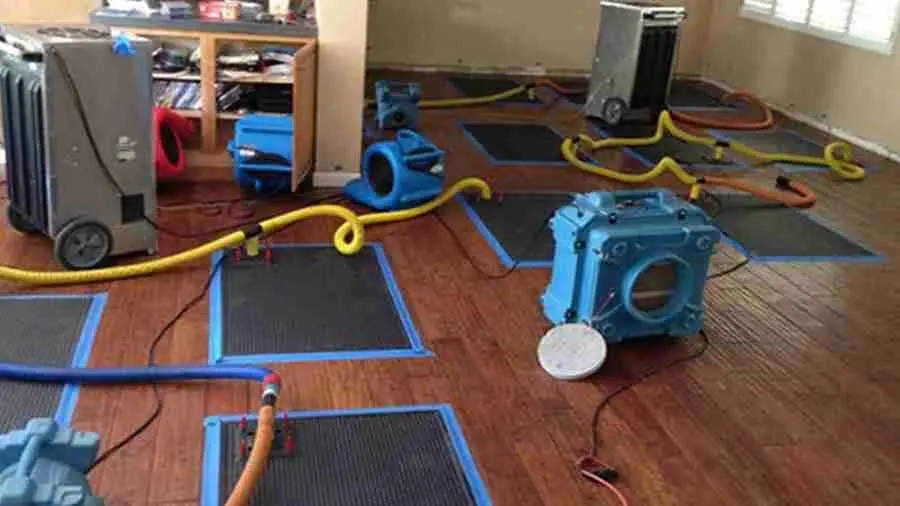
How structural drying and dehumidification is handled in La Vista
The tech who does the walkthrough maps moisture before any equipment goes down, so the drying plan matches what is actually wet. Equipment stays until the readings say dry, not until it looks dry.
- 1
Take readings
The tech measures every wet material and a dry reference for comparison.
- 2
Set up equipment
Air movers and dehumidifiers are placed to suit the class of loss.
- 3
Record each day
Temperature, humidity, grains per pound and material readings go into the log daily.
- 4
Pull equipment
Machines leave once materials are within 2 to 4 points of the dry reading.
Drying decides whether a loss comes back as a stain, a smell or a warped floor. Pad, subfloor and bottom plates can hold water long after carpet feels dry. Under the S500 standard, a material counts as dry when it reads within 2 to 4 points of a reference reading taken elsewhere in the same building. La Vista's houses date from the 1960s through the 2000s, so every house gets its own reference.
First steps for structural drying and dehumidification in La Vista
- 1
Keep it sealed up
Keep doors and windows shut around the drying area unless the team asks otherwise.
- 2
Do not unplug anything
Leave air movers and dehumidifiers running, overnight included.
- 3
Keep the temperature even
Steady indoor warmth helps the dehumidifiers perform.
- 4
Speak up about changes
Mention any new stains, odors or warping floors to the drying team.
What does structural drying and dehumidification cost in La Vista, NE?
In La Vista, NE, structural drying usually costs $1,000 to $10,000. Cost rises with the class of loss, the floor area, the type of materials and how many days the equipment runs.
Class 1 or 2 in one area
- Air movers placed
- LGR dehumidifier
- Readings each day
Class 3 across several rooms
- Cavity drying
- More than one LGR unit
- Psychrometric logs
Class 4 dense materials
- Desiccant units
- Floor drying mats
- Longer monitoring
Ranges are typical, not a quote: category of water, square footage, material class and how fast drying started move the number most. Run the water damage cost calculator for a closer range.
How equipment gets sized
A plan comes first, and the class of loss drives it.
- Class 1: a corner or part of a room, with materials that absorb little.
- Class 2: an entire room, carpet wet and walls wet at the base.
- Class 3: walls, ceilings and floors saturated, commonly from above.
- Class 4: hardwood, plaster, block and concrete that store water deep and need desiccant units.
What the drying team tracks
Air movers push air across wet surfaces while LGR dehumidifiers remove the moisture that air picks up. Every day the team logs temperature, relative humidity and grains per pound inside and outside the drying area plus material readings, and that record shows the structure really reached the goal.
- A thermal camera and pinless meters find moisture hiding behind finished surfaces.
- Drying systems for cavities and floors push air where fans cannot go.
- A lower level may need a longer run; basement flood cleanup covers that case.
Why the logs matter
An adjuster can see from the daily psychrometric log that equipment left because the structure was dry, not because time ran out. The drying time estimator shows a typical window, and water extraction covers the step before drying.
Structural drying and dehumidification across La Vista and nearby towns
The drying team covers La Vista homes and apartments from Echo Hills and Crestview Heights to Southwind, Cimarron Woods and the Central Park area, ZIP 68128 and 68138.
The same service nearby: structural drying and dehumidification in Bellevue, Ralston, Papillion.
Related water damage services in La Vista
Structural Drying and Dehumidification questions in La Vista, NE
Why should the equipment run overnight?
Drying works at a steady pace. Shutting equipment off lets moisture creep back into materials and adds days.
What counts as a dry reference?
A measurement of the same material type taken somewhere the water never went. Anything within 2 to 4 points of it counts as dry.
When are desiccant units needed?
When materials are dense and hold water deep, such as hardwood or concrete, because desiccant units still work at humidity and temperature levels where LGR units struggle.
How many days does drying take?
Three to five days for a contained loss; basements, hardwood and plaster run longer.
Will the noise and heat be a problem?
Air movers and dehumidifiers hum steadily and add warmth. The team places them for the fastest dry, and the noise ends when the readings do.
Can drywall be dried in place?
Sometimes, if clean water was found early and a cavity system can reach it. Category 3 water ends that option.
Need the structure dried properly in La Vista? Call now.
The job is done when readings say so. The drying team logs daily until framing and subfloor reach the goal.
(888) 664-3027La Vista drying team, 24/7- Bellevue, NE · Sarpy County
- (888) 664-3027, open 24/7
- Dried to the IICRC S500 standard
- Find us on Google