River and Creek Flood Cleanup in Bellevue, NE
Floodwater from the Missouri River or Papio Creek carries mud, fuel and sewage. The mitigation team treats it as Category 3, mucks out the silt, removes what it soaked and dries the structure back to a verified reading.
(888) 664-3027Start the Bellevue flood cleanup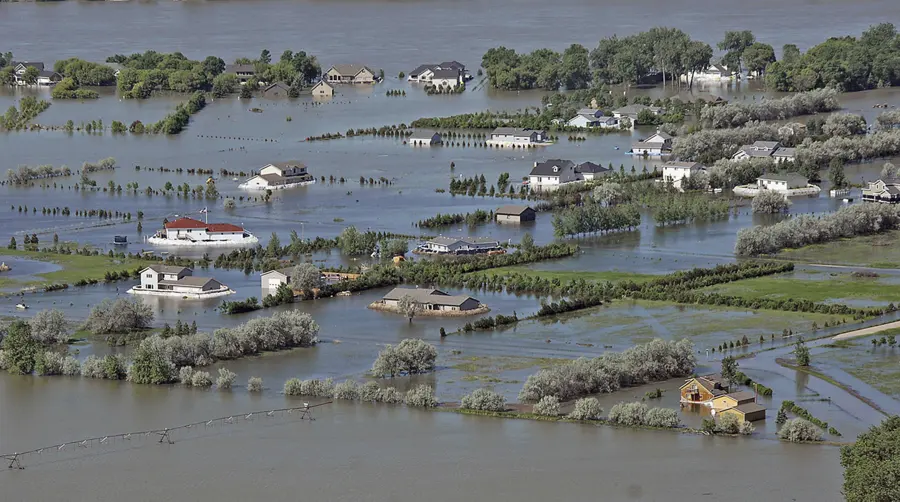
How river and creek flood cleanup is handled in Bellevue
The tech who does the walkthrough maps moisture before any equipment goes down, so the drying plan matches what is actually wet. Equipment stays until the readings say dry, not until it looks dry.
- 1
Safety and documentation
The team confirms the building is safe, photographs the high-water line and maps moisture.
- 2
Muck-out and extraction
Mud, silt and standing water are removed from floors and cavities.
- 3
Remove and treat
Soaked porous materials come out, and surfaces get an EPA-registered antimicrobial.
- 4
Dry the structure
Air movers, LGR and desiccant units run until framing and subfloor read dry.
Bellevue has two kinds of flood water. The Missouri River rises slowly along the east edge of town, as it did in 2011, in March 2019 and again in June and July 2024. Papio Creek rises fast after heavy rain, as it did on May 21, 2024 at the 36th Street bridge north of Highway 370.
First steps for river and creek flood cleanup in Bellevue
- 1
Wait for safe entry
Do not enter until floodwater is down and the power is off at the panel or meter.
- 2
Wear protection
Boots and gloves at minimum; floodwater carries sewage and chemicals.
- 3
Document the high-water mark
Photograph the water line on walls before anything is removed.
- 4
Call before removing
Let the mitigation team map and document before major tear-out.
What does river and creek flood cleanup cost in Bellevue, NE?
In Bellevue, NE, river and creek flood cleanup typically runs $5,000 to $40,000, depending on the depth of the water, how many levels it reached, the amount of silt and how much drywall, insulation and flooring has to come out.
Basement or garage only
- Muck-out
- Flood cuts
- Antimicrobial
Lower level and main floor
- Drywall and insulation removal
- Flooring removal
- LGR and desiccant drying
Deep or long-standing water
- Full Category 3 protocol
- Extended structural drying
- Claim file documentation
Ranges are typical, not a quote: category of water, square footage, material class and how fast drying started move the number most. Run the Bellevue water damage cost calculator for a closer range.
Why floodwater is handled as Category 3
River and creek water picks up whatever it crosses before it reaches a building.
- Silt and mud that settle into carpet, wall cavities and ductwork.
- Fuel, chemicals and sewage from overwhelmed systems upstream.
- Bacteria that make soaked drywall, insulation and carpet unsafe to dry in place.
- Debris that hides structural damage until the water drops.
How a flood cleanup runs
The mitigation team starts once the water is down and the building is safe to enter. Mud and standing water come out first, then soaked carpet, pad, drywall and insulation are cut out and removed, usually with a flood cut above the high-water line. Surfaces are cleaned and treated with an EPA-registered antimicrobial, and drying runs with air movers, LGR dehumidifiers and desiccant units on dense materials.
- Moisture mapping covers framing, subfloor and the slab, since floodwater soaks deep.
- Timestamped photos and the high-water line go into the claim file.
- Groundwater that lingers after a river event can keep a basement wet; see foundation seepage cleanup.
Flood insurance and preparation
River and creek flooding is covered by flood insurance, not a standard homeowners policy, and Bellevue takes part in the National Flood Insurance Program. FloodSmart explains coverage, and the FEMA flood map page shows mapped flood zones. For storm runoff into a basement, see basement flood cleanup.
River and creek flood cleanup across Bellevue and Sarpy County
The Bellevue restoration crew covers ZIP 68005, 68123 and 68147, from Olde Towne and Fontenelle Hills to Twin Creek, Wolf Creek and the neighborhoods around Offutt Air Force Base.
Nearby coverage reaches Papillion, La Vista, Ralston, Plattsmouth, Council Bluffs and Omaha.
Related water damage services in Bellevue
River and Creek Flood Cleanup questions in Bellevue, NE
Is river flooding covered by homeowners insurance?
Usually not. Rising surface water from a river or creek is covered by flood insurance, such as an NFIP policy. Coverage depends on your policy, so check with your own insurer.
Can drywall touched by floodwater be dried?
No. Floodwater is Category 3, so drywall, insulation and carpet it soaked are removed. Framing and concrete are cleaned, treated and dried.
How long does drying take after a flood?
Most flooded structures take five to ten days once removal is done. Deep flooding and dense materials take longer.
What is a flood cut?
Drywall cut in a straight line above the high-water mark so wet material and insulation come out and the wall cavity can dry.
Why does my basement stay wet after the river drops?
High river levels raise groundwater and back up local drainage, so water can keep seeping in for weeks after the surface flood is gone.
Should I start tearing out myself?
Photograph everything first and let the mitigation team document the loss. Removal before documentation can complicate the claim.
River or creek water in Bellevue? Start the cleanup.
Floodwater is Category 3. The mitigation team mucks out, removes what it soaked and dries the structure to a verified reading.
(888) 664-3027Bellevue flood response, 24/7- Bellevue, NE · Sarpy County
- (888) 664-3027, open 24/7
- Dried to the IICRC S500 standard
- Find us on Google