A leak in a downtown shop or office is a business problem before it is a building problem. Plattsmouth's Main Street buildings are old, solid and slow to dry, so the first day sets the tone.
Key takeaways
- The Main Street Historic District has 45 buildings on the National Register of Historic Places, and many are two-story masonry Italianate commercial buildings.
- Plattsmouth city code lets the utilities superintendent shut off water to a premises with a leak or break until the consumer repairs it.
- Stop the water, protect stock and records, then document before anything moves.
- Old plaster, brick and wood framing hold moisture longer than modern drywall, so drying is measured, not guessed.
- Keep the business running where possible by separating wet areas from dry ones.
The buildings on Main Street
Downtown Plattsmouth is anchored by the Main Street Historic District, which has 45 buildings on the National Register of Historic Places. Most of the downtown commercial buildings are two-story masonry Italianate structures.
That construction is part of the charm. It also shapes how water moves through a shop, a restaurant or an office.
- Brick and masonry walls that absorb and release water slowly.
- Upper floors above a street-level shop, where a leak travels down.
- Older plaster and wood framing in ceilings and partitions.
- Storefronts with shared walls, so a leak can reach a neighbor.
The first thing to do: stop the water
Find the source and stop it. For a supply pipe, that means the nearest shutoff valve or the main.
Plattsmouth runs its own Water Department. City code lets the utilities superintendent shut off water to a premises with a leak or break until the consumer repairs it, so a leak can lead to a shutoff notice as well as a wet floor.
A leak that starts upstairs may not show itself until a ceiling stain appears below, so check every floor of the building.
- Shut the valve for the leaking fixture or the building main.
- Turn off power to wet areas only if it is safe to reach the panel.
- Call the property owner or manager if the building is leased.
- Move people away from sagging ceilings.
Protecting stock, records and equipment
A shop owner's first worry is usually inventory. Move high-value items up and away from the water first, and leave heavy items for the crew.
Paper records, point-of-sale equipment and computers are easy to forget until they are wet.
Move first
Lift goods onto shelves, tables or racks. Cover items that cannot be moved with plastic sheeting.
Record before cleanup
Photograph the damage, the stock and the equipment before anything is moved.
A written list with rough values makes a claim stronger.
Why old masonry dries slowly
Brick, plaster and old framing are not like modern drywall. Water goes in deep and comes out slowly.
A surface can feel dry while the wall behind it is still wet. That is why the drying team uses moisture meters and readings, not touch.
The Plattsmouth structural drying page explains how equipment and readings steer the work.
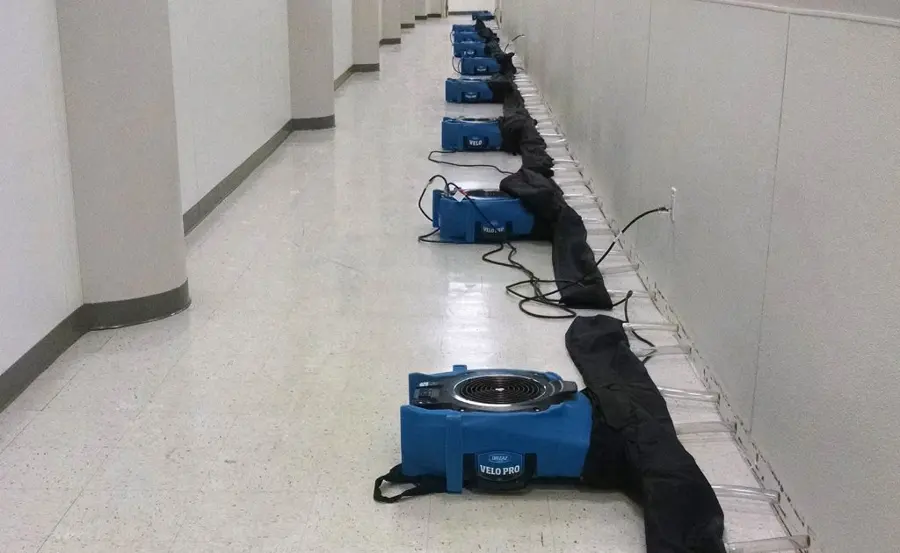
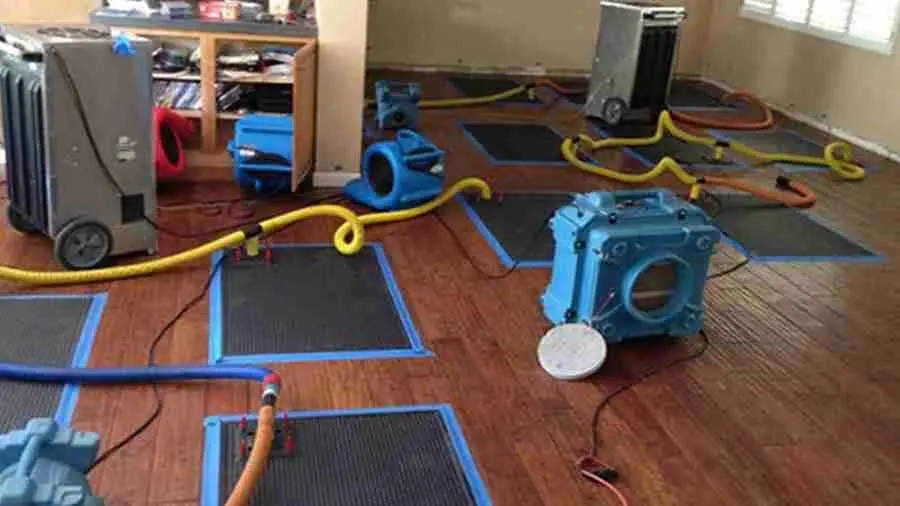
- Air movers push dry air across wet surfaces.
- Dehumidifiers pull moisture out of the air.
- Readings are taken on a schedule and compared to a dry goal.
- Equipment is moved as areas reach the goal.
Common causes in older downtown buildings
Water finds its way into a historic building in several ways. Knowing the likely source helps decide how far the cleanup has to reach.
The restoration team traces the source with meters and opens a wall only where the readings point.
- A failed supply pipe or fitting inside a wall or ceiling.
- A leaking roof or flashing above the upper floor.
- A drain or sink on an upper floor that overflows.
- A water heater or appliance in a back room or basement.
- Ground water seeping into a basement storage room.
Commercial losses are different
A homeowner can move in with family. A business has customers, staff and deadlines.
The Plattsmouth commercial water damage page covers how the restoration team works around operating hours and keeps dry areas open where it is safe.
- Separate wet zones with plastic barriers.
- Keep entrances and restrooms usable if possible.
- Plan work around opening hours when the building allows.
- Tell the landlord and neighboring tenants if water may cross shared walls.
A simple day-one checklist for the owner
A short list keeps a stressful day on track. It also gives the restoration team what it needs to plan the job.
Most of these steps take minutes and save hours later.
- Write down when the leak was found and what was done to stop it.
- Photograph the ceiling, walls, floor, stock and equipment.
- Tell the building owner, the insurer and any neighboring tenants.
- List the items that are wet and the items that are still dry.
- Note which rooms are needed to keep the business open.
Extraction and the first day of drying
Standing water comes out first. The Plattsmouth emergency water extraction crew uses pumps and extractors so water does not soak further into floors and walls.
After extraction, wet carpet, ceiling tile and damaged drywall are removed where readings say they must be. The rest is dried in place.
The claim and the paperwork
Commercial policies vary, and a landlord's policy and a tenant's policy usually cover different things. Coverage depends on the policy, so check with the insurer or the property manager.
A clear file speeds everything up.
- Dated photos of the damage and the source.
- An inventory of damaged stock and equipment.
- A note of lost hours or closed days.
- Receipts for emergency work and the date each step happened.
Questions
Can water from an upstairs unit reach a shop below?
Yes. In two-story buildings, water from an upper floor travels down through ceilings and walls, so the shop below can be damaged even when the source is somewhere else.
Does city code allow the water to be shut off for a leak?
Plattsmouth city code lets the utilities superintendent shut off water to a premises with a leak or break until the consumer repairs it.
Why do old brick buildings take longer to dry?
Brick, plaster and old framing absorb water deeply and release it slowly, so the drying team relies on moisture readings rather than how a surface feels.
Should stock be moved before the crew starts?
Yes, if it is safe. Move high-value items and records to dry areas, and leave heavy items for the crew.
Who pays for the damage?
That depends on the policies involved and on who owns the building. Check with your own insurer or the property manager.
What about tenants who share a wall?
Tell neighboring tenants and the owner quickly. Water can cross shared walls and ceilings, and the drying plan may need to include more than one space.
Can the business stay open during drying?
Sometimes. Dry areas can often stay in use while wet zones are separated, but the crew decides after readings show where moisture sits.