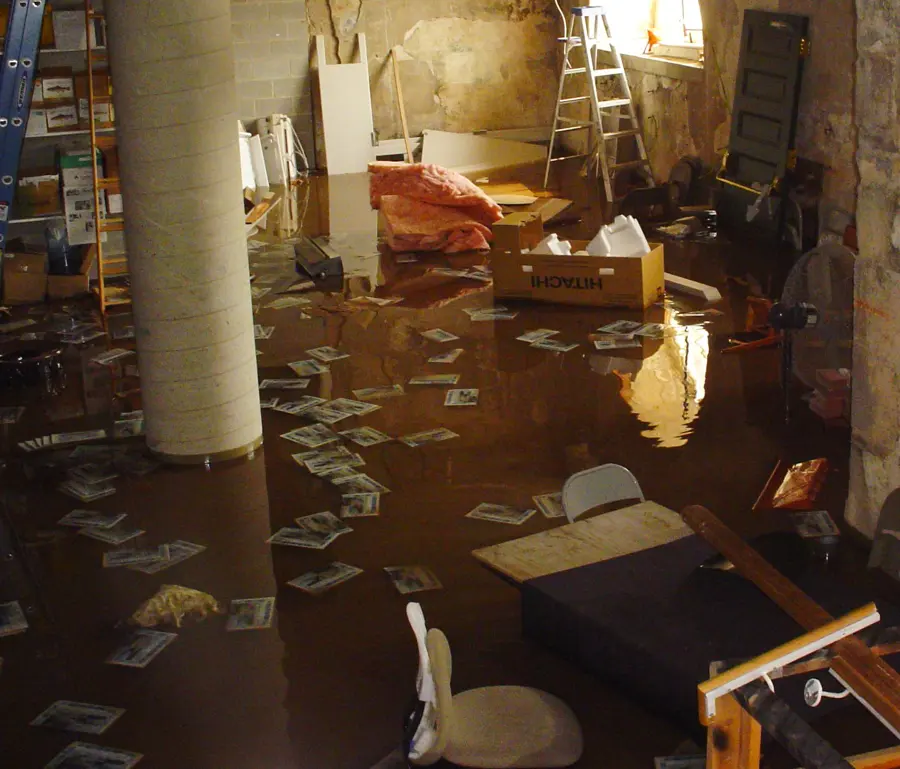
Papillion is named for Papillion Creek, and the creeks that cross it have a long flood history. When heavy rain pushes them up, the lowest level of a house is where the water often ends up.
Key takeaways
- The City of Papillion names Big Papillion Creek, West Papillion Creek, Walnut Creek and Midland Creek as local flood hazards.
- The city says standard homeowners insurance does not cover flood damage and that flood insurance has a 30-day waiting period.
- Water meters sit inside Papillion houses, in the basement, so a basement flood can reach the plumbing area quickly.
- Pull standing water out first, then remove wet carpet and pad, then dry the structure to a reading.
- Photograph everything before it moves and keep the claim file in one place.
Where Papillion's water comes from
The City of Papillion says Big Papillion Creek and West Papillion Creek both have a history of flooding. Walnut Creek and Midland Creek are also named as local flood hazards.
The recreation areas are part of the picture too. Walnut Creek Recreation Area, Portal Recreation Area, Big Elk Lake Recreation Area and Prairie Queen Recreation Area fill with water in heavy rain.
- 1964: a flood in the Papillion area killed seven people.
- 1993: heavy downpours damaged foundations and retaining walls in the Big Papillion Creek watershed.
- March 2019: the West Papillion Creek levee at the 84th Street Bridge held water in its banks.
- July 2024: heavy rain left creek and lake levels very high and Portal Lake full for the first time.
What a wet basement looks like in the first hour
Water can arrive as a seep along the wall, as a rise at the floor drain or as a flood from a failed sump pump. The source matters because the cleanup is different.
The City of Papillion says residential water meters sit inside the house in the basement, which means the same room often holds the plumbing, the laundry and the stored belongings.
Safety first
Water and electricity are the main danger in a wet basement. Do not step into standing water if outlets, the panel or appliances are near it.
If power must be shut off, do it from a dry spot or have it handled by a professional.
- Turn off power to the basement from a dry location only.
- Stay out of water that touches outlets or equipment.
- Keep children and pets upstairs.
- If the water came from a drain, treat it as contaminated.
Extraction, then removal
Speed matters. Every hour of standing water pushes moisture further into drywall, pad and the framing behind it.
The restoration team starts with extraction, using pumps and truck-mounted equipment for the bulk of the water. The Papillion emergency water extraction page explains the step.
Items that can be saved are moved out and dried separately, while items that cannot be cleaned are photographed and bagged.
Creek water and contamination
Creek floodwater carries soil and runoff, so it is treated as contaminated. Carpet and pad that sat in it are normally removed.
Drywall is cut back to where readings show it is dry.
Clean water from a failed pump
If the pit overflowed because the pump failed, the water may be cleaner than creek water, but it still soaks flooring and drywall.
The Papillion sump pump failure cleanup page covers that case.
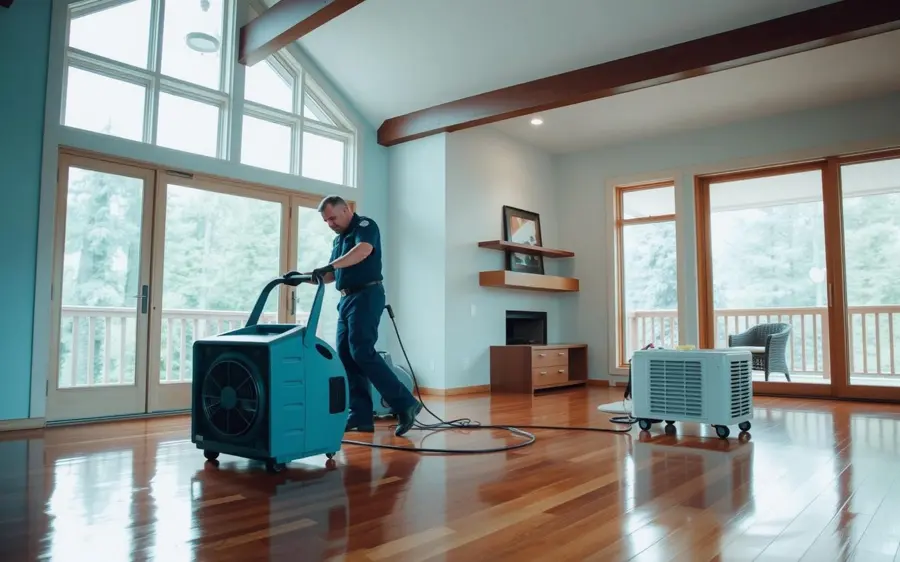
A sump pump that fails when it is needed
No Papillion figures say how many homes have a sump pump, so there is no promise that every house has one. Where a pump exists, it is the first defense.
A pump can fail from a power outage, a stuck float or simply too much water too fast. After a heavy rain on creek-fed ground, the pit can fill faster than the pump can empty it.
- Check whether the pit is full and whether the pump is running.
- Look for a tripped breaker or a power outage.
- Do not reach into the pit while it is plugged in.
- Note the time you found it for the claim file.
What to tell the restoration team
A few facts help the crew plan before the first hose is unrolled. They also help sort the water by source, which affects how materials are treated.
The team will also ask about the layout, since a finished basement with a bath and a laundry area is a different job than a bare utility space.
- Where the water entered: a wall, a drain, the sump pit or a window well.
- How long it has been standing.
- Whether the water was clear, muddy or dark.
- What is in the room, including furniture, boxes and appliances.
- Whether any power or gas equipment sits near the water.
Drying the structure
Once the standing water is out, the drying team sets air movers and dehumidifiers and takes moisture readings. Readings, not a calendar, decide when the job is done.
The median Papillion home was built in 1991, so many houses have finished basements with carpet, trim and drywall. All of that has to be checked, because wet material hides behind clean surfaces.
The process is described on the Papillion basement flood cleanup page.
Insurance basics and the claim file
The City of Papillion states that standard homeowners insurance does not cover flood damage, and that flood insurance has a 30-day waiting period. Papillion participates in the Community Rating System, so discounted flood premiums may be available.
Whether a loss is covered depends on the policy and on how the water got in. The safest move is to ask your own insurer directly.
- Photos of the water, the damage and the items before moving them.
- A written list of what was in the basement.
- Receipts and notes for emergency work.
- The date and time the water was first noticed.
Questions
Which creeks affect Papillion?
The City of Papillion names Big Papillion Creek, West Papillion Creek, Walnut Creek and Midland Creek as local flood hazards.
Does homeowners insurance cover flood damage in Papillion?
The city states that standard homeowners policies do not cover flood damage. Check your own policy and ask your insurer what applies.
How soon should water be pumped out?
As soon as it is safe. Standing water spreads moisture into drywall, pad and framing, so the first hours matter most.
Can the carpet be saved after creek flooding?
Usually not. Creek floodwater is treated as contaminated, so carpet and pad that soaked in it are normally removed.
What if the basement flooded because the sump pump failed?
The cleanup still starts with extraction and moisture readings. The water may be cleaner, but wet flooring and drywall still need to be dried or removed.
Why does the meter location matter in a flooded basement?
The City of Papillion says residential water meters sit inside the house in the basement. A flood in that room can reach the plumbing area, so the crew checks it with the rest of the space.
What is the Community Rating System?
It is a program Papillion participates in, and the city says discounted flood premiums may be available because of it. Ask an insurance agent what applies to a specific property.