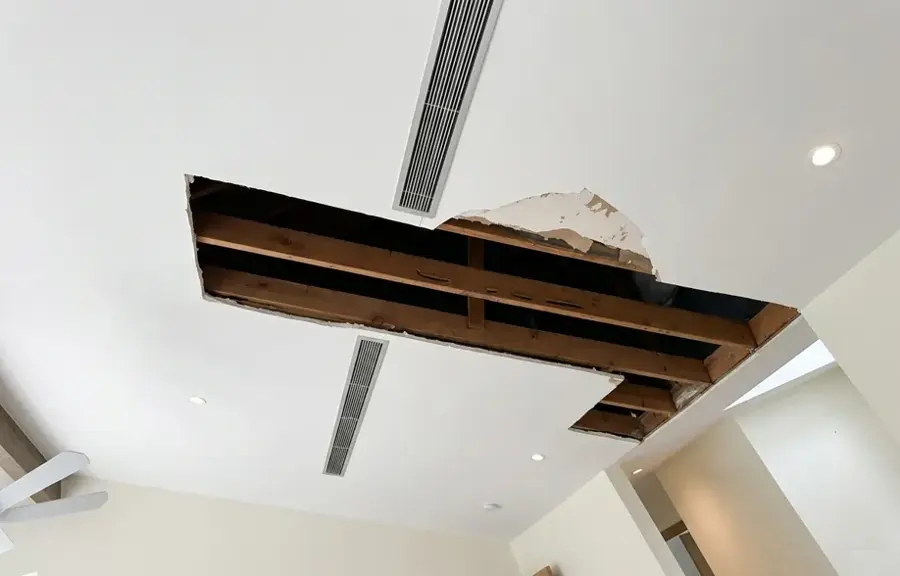
A lot of La Vista lives in buildings with a neighbor overhead. When that neighbor's dishwasher, toilet or supply hose fails, the water often arrives as a brown stain on the ceiling below.
Key takeaways
- La Vista has 6,958 housing units, and 3,301 of the occupied homes are renter-occupied, so ceiling leaks from a unit above are a real local pattern.
- Stop what can be stopped, tell the property manager at once and keep everything in writing.
- A bowed or sagging ceiling holds water and can fall, so keep people out from under it.
- The ceiling is opened safely and the joist bays above it are dried, not just painted over.
- Check the lease and the insurance policy for who pays for what.
Why La Vista sees these leaks
La Vista is a mix of single-family streets and apartment buildings. The census numbers show 3,841 detached single-family homes beside 956 units in 5 to 9 unit buildings, 1,000 in 10 to 19 unit buildings, 394 in 20 to 49 unit buildings and 559 in buildings of 50 or more units.
Where homes are stacked, plumbing is stacked too. A failure in one unit has a short path to the ceiling of the unit below.
- Dishwasher and washer supply hoses on the upper floor.
- Toilet and tub overflows.
- Failed shutoff valves under sinks.
- Water heater leaks in a closet above another unit.
What a ceiling leak looks like
The first sign is usually a stain that is yellow or brown. It may grow, or it may stay the same size and feel damp.
A bowed ceiling is more serious. Drywall can hold a lot of water, and a bulge is a sign the water is trapped behind it.
Water travels sideways before it shows. It follows joists and drywall seams, so the stain may appear several feet from the real source.
Color matters too. A fresh leak leaves a pale, damp patch, while an old or repeated one leaves rings and darker edges.
- A stain that grows after the upstairs neighbor runs the washer or takes a shower.
- A ceiling that feels cool or soft to a light touch.
- Peeling paint or bubbling drywall tape.
- A musty smell in the room below.
The first steps, in order
Safety comes first, because a wet ceiling can fall and wet light fixtures can be live.
Then the goal is to stop the source and slow the spread.
A quick call to the unit above often finds the source in minutes, because the neighbor may not know a hose has failed.
- Keep people away from a bowed or dripping ceiling.
- Turn off power to the room at the panel if water is near a fixture and it is safe to reach.
- Put a bucket under a drip and move furniture out of the way.
- Call the upstairs neighbor or the property manager so the source is stopped.
- Photograph the stain, the ceiling and the damaged items.
Telling the right people
In a multi unit building, the source is often outside the unit that is wet. The property manager or owner has to stop it, and an early written note makes the timeline clear.
The restoration team can document and dry the unit that was damaged, but the source still has to be found and fixed. More about local losses is on the La Vista water damage restoration page.
If you rent
Send the property manager a message with photos and the time you first noticed the leak. Keep a copy.
Check the lease and any renters policy for what is covered and who arranges the cleanup.
If you own the unit
Contact the association or manager and your own insurer. Coverage depends on the policy and on where the water came from.
Keep receipts for any emergency work.
How the ceiling is opened and dried
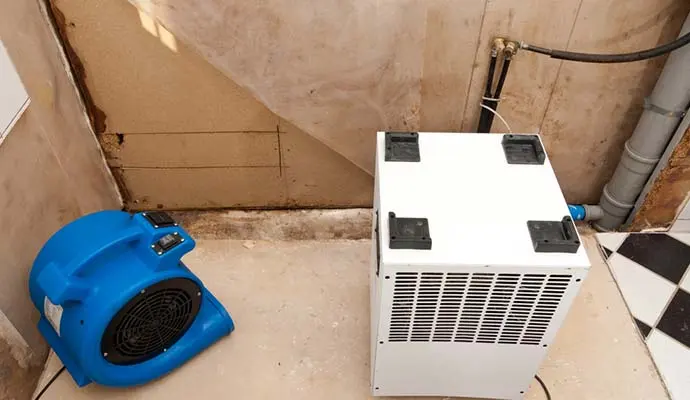
The mitigation team does not guess. It uses a moisture meter and a thermal camera to find where the water went, then opens the ceiling only where the readings say.
A small hole lets trapped water drain safely and releases pressure before drywall is cut. Wet insulation is pulled, and the joist bays are dried with air movers and dehumidifiers.
The process is on the La Vista ceiling leak water damage page.
The same readings are taken again on later visits. When they match the dry goal for the framing and drywall, the structure is ready to close up and finish.
- Moisture readings map the wet area.
- A controlled opening drains trapped water.
- Wet insulation and drywall are removed.
- Framing is dried to a target reading before anything is closed up.
When an appliance is the cause
Many upstairs leaks start with a washer or dishwasher. A hose can split, a fitting can loosen or a drain can back up.
The unit below may get wet through the floor assembly rather than a single visible pipe. The La Vista appliance leak water damage page covers how that kind of leak is traced and dried.
- Check the hoses behind the washer for bulges or drips.
- Look for a wet floor around the dishwasher.
- Notice stains that appear after a particular appliance runs.
- Mention this to the crew, because it tells them where to look.
Repairs, permits and the paper trail
La Vista requires plumbing permits for replacing plumbing fixtures and water, drainage, sewer and gas piping. That means a repair may involve the La Vista Building Department as well as a plumber.
The paper trail is worth keeping. Dates, photos, messages and receipts help in any claim or dispute.
Plumbing in apartment buildings is shared in ways a single house is not, so a repair in one unit may need coordination with the building.
- Save every message with the property manager.
- Keep a list of items damaged with rough ages and values.
- Note the date of each repair or inspection.
- Keep copies of the final repair paperwork.
Questions
Who pays when water from the unit above damages my ceiling?
That depends on the lease, the building's policy and the cause. Tell the property manager in writing and check your own insurance.
Is a stained ceiling dangerous?
A stain alone is not, but a bowed or dripping ceiling can collapse and may be near live wiring. Keep people away until it is checked.
Can I just paint over a ceiling stain?
No. Paint hides the stain but not the moisture. Wet insulation and framing above the drywall have to be dried or the damage continues.
How does the crew find where the water went?
It uses moisture meters and a thermal camera, then opens the ceiling only where the readings show water.
Does La Vista require a permit to replace plumbing fixtures or piping?
La Vista requires plumbing permits for replacing plumbing fixtures and water, drainage, sewer and gas piping. Ask the La Vista Building Department about a specific job.
What should be in the first message to the property manager?
The date and time the leak was found, where the water is showing, photos of the ceiling and any damaged items, and a request to stop the source and confirm in writing.
Is a ceiling leak in a condo handled the same way as in a rental?
The drying work is the same. Who arranges and pays for it differs, so check the association rules, the lease and your own insurance policy.