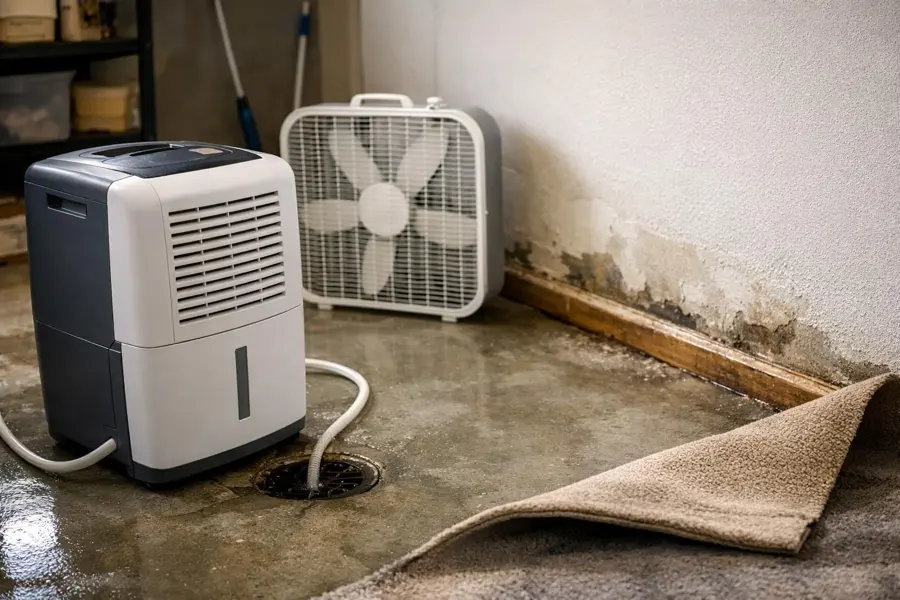
In Council Bluffs, Iowa, a backed-up floor drain is not always a clog. When the Missouri River is high, the way the city drains storm water can push the problem into basements.
Key takeaways
- When the river is high, the city closes sluice gates and pumps storm water over the levee, which slows drainage and can cause backups.
- On May 28, 2019, sewers backed up through floor drains into homes in the Eagle Trail neighborhood after heavy rain with the river high.
- In June 2024 the city closed all storm sewer discharge points along the Missouri River, the first such closure after the 2019 flood, and low-level street flooding followed.
- Water that comes up a floor drain is treated as contaminated, so the cleanup differs from a clean pipe leak.
- Document the drain, the water and the damaged items before anything is moved.
Why a high river can back up a drain
Council Bluffs sits on the east bank of the Missouri River across from Omaha, Nebraska. About half of the city is built in the river floodplain, and a levee system protects much of it.
The levee works well at keeping the river out, but it also keeps rain in. Storm water has to go somewhere, and when the river is high the usual outlets do not work.
Sluice gates and pumping
When the river is high the city closes its sluice gates and pumps storm water over the levee. That is a slower route than gravity.
The slower route means storm water and sewage can stack up in the system, and a floor drain at the lowest point of a house is the first place the pressure finds an opening.
A homeowner cannot see any of this from inside the house. The first sign is usually a gurgle, a smell or dark water at the drain.
- Gates closed to hold the river out.
- Storm water pumped over the levee instead of draining by gravity.
- Heavy rain arriving while the river is already high.
- Floor drains in low basements as the weak point.
What happened in Eagle Trail and in June 2024
On May 28, 2019, heavy rain fell while the river was high, and sewers backed up through floor drains into homes in the Eagle Trail neighborhood.
In June 2024 the city closed all storm sewer discharge points along the Missouri River for the first time after the 2019 flood. Low-level street flooding followed.
Both events share a pattern: rain plus a high river, not a pipe failing on a dry day.
The system behind the drain
The Council Bluffs Water Pollution Control Plant treats an average of 7 million gallons of wastewater a day. During storms, flows have reached as high as 30 million gallons a day.
The city says it is working to remove storm water inflow sources from its sanitary sewer system. That work matters because rain that gets into the sanitary system adds to the load.
In November 2023 a broken sewer pipe also led the city to divert wastewater into the Missouri River for up to 10 days. The point for a homeowner is that the system has limits.
What to do in the first hours
A backup is a health issue before it is a cleanup issue. Sewage carries bacteria, and the water is treated as Category 3.
The first steps are about safety, then about stopping the water from spreading.
- Stop using water in the house so nothing else goes down the drain.
- Keep children and pets out of the basement.
- Do not touch the water with bare hands, and do not use a standard household vacuum on it.
- Photograph the drain, the water depth and the damaged items before moving anything.
- Move dry items to a higher level if it is safe.
Which homes feel it most
Council Bluffs has a wide mix of housing. The median home was built in 1965, and 7,312 homes were built in 1939 or earlier.
Older neighborhoods such as the West End and Oakland-Fairview, and 1960s areas such as Twin City, all share one thing: a floor drain or a basement fixture at the lowest point of the plumbing.
- Homes with a basement bath or a laundry drain at the lowest level.
- Properties in the Missouri River floodplain.
- Homes in the far southern part of the city, which the levee does not protect.
- Older houses where the lowest drain has never had a backflow device.
What the cleanup includes
The Council Bluffs water damage pros contain the area, extract standing water and remove porous materials that touched it. Carpet, pad and wet drywall are the usual casualties.
A water extraction step comes first on every job, because standing water spreads moisture into the structure quickly.
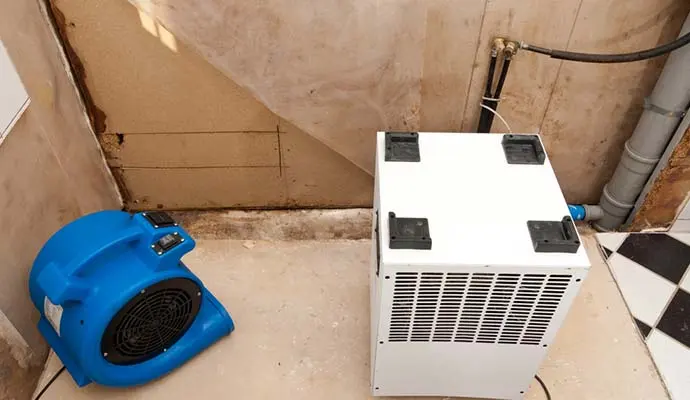
Hard surfaces are cleaned and treated, and the structure is dried with air movers and dehumidifiers to a reading, not a guess.
The details of that process are on the Council Bluffs sewer backup cleanup page, and the lower level work is on the Council Bluffs basement flood cleanup page.
Insurance and the claim file
Coverage for sewer or drain backup depends on the policy. Some policies exclude it unless an endorsement was added, so ask your own insurer before assuming anything.
A clear file helps either way. The date, the weather and the river conditions all show why the water came up.
- Dated photos of the drain and the damage.
- A written list of damaged items with rough ages.
- Notes on the weather and any city notices about the river.
- Receipts for emergency work.
Questions
Why do floor drains back up when the river is high?
When the river is high, the city closes sluice gates and pumps storm water over the levee. That slows drainage, so water can back up through low drains.
Was this only a 2019 problem?
No. Sewers backed up in Eagle Trail on May 28, 2019, and the city closed all storm sewer discharge points along the river in June 2024, with low-level street flooding.
Is water from a floor drain contaminated?
Yes. It is treated as Category 3, so materials that soaked in it are usually removed instead of dried in place.
Can I clean it up myself?
Small amounts on a hard floor can be handled with protective gear, but a real backup involves contamination and wet building materials, which is work for a trained crew.
Will my insurance cover it?
That depends on the policy. Check with your own insurer, and ask specifically about sewer or drain backup.
What should be photographed before cleanup starts?
The drain, the depth of the water, the walls and floor, and every item that was damaged. Dated photos help show what the water did and when.
Do backups only happen in Eagle Trail?
No. Eagle Trail is the neighborhood named in the May 28, 2019 backups, but any low drain in the city can be affected when rain and a high river arrive together.