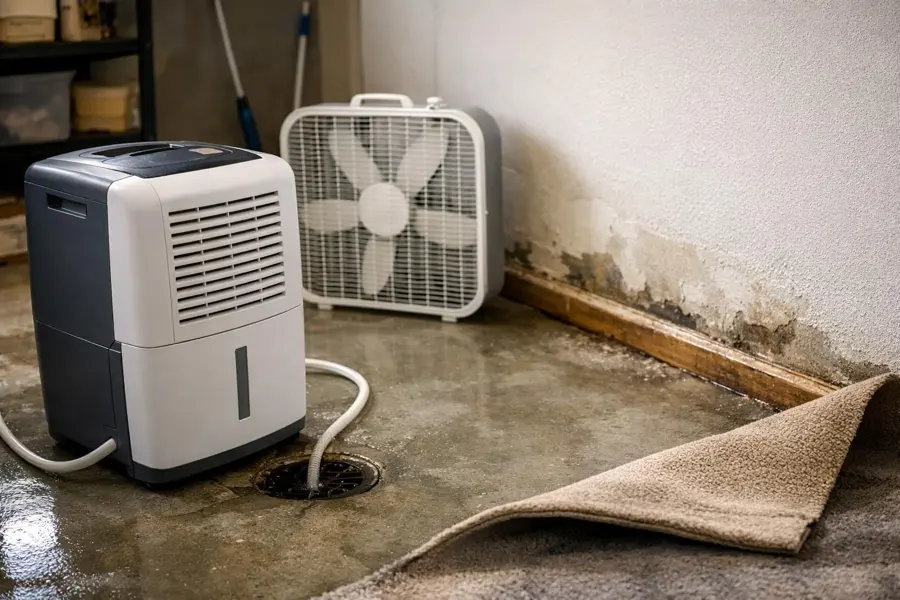
When a floor drain starts pushing dirty water into a Bellevue basement, the clock matters more than the cleanup plan. The first day decides how much of the carpet, drywall and storage has to be thrown away.
Key takeaways
- Water that comes up a floor drain is treated as Category 3, meaning it carries contamination, so porous materials that touched it are usually removed.
- The lowest drains in a house sit closest to sewer height, which is why basements take backups first.
- City of Bellevue Public Works recommends a backflow prevention valve on the lowest drains.
- Sewer backup usually needs a special insurance rider, so the claim file starts with photos and a written list on day one.
- Keep children, pets and bare hands away from the water, and do not run a standard shop vacuum on it.
Why basements take the backup first
A sewer backup is a pressure and height problem. Wastewater looks for the lowest opening, and in most Bellevue homes that is a basement floor drain, a laundry standpipe or a basement bath.
City of Bellevue Public Works notes that basements and lowest-level drains sit near sewer height, so they take the backup before anything upstairs does.
A blockage or a surcharge does not need a flood. It can happen on a dry day, which is why the first sign is often a gurgle or a smell rather than a puddle.
- A gurgling floor drain after the washer drains.
- A toilet that bubbles when a basement fixture runs.
- Dark water or sludge at the lowest drain.
What is behind the blockage
In Bellevue, the sewer lateral from the house to the main is the owner's responsibility. That is the buried pipe where most household backups begin.
Older jointed laterals are the usual suspects. Tree roots work into the joints, and grease and wipes build up on the rough spots.
Older neighborhoods
Olde Towne Bellevue has homes from the 1920s and earlier, and the postwar housing near Offutt Air Force Base is also long in the tooth.
Mature trees over an older lateral make root intrusion more likely.
Newer neighborhoods
Subdivisions such as Tregaron and Twin Ridge are newer, but a clog from wipes or grease can still back up a drain in any house.
The median Bellevue home was built in 1982, so many laterals are decades old.
The first hours: safety before cleanup
Sewage carries bacteria, so the first job is keeping people out of it. The water is Category 3, the highest contamination class in the S500 water damage standard.
A home with a backup is not a do-it-yourself mop job. Contact with skin, splashes and airborne spray all raise the risk.
Wet items that cannot be cleaned are photographed before they leave the house, which helps the claim later.
- Stop running water in the house: no laundry, dishes or showers.
- Keep children and pets out of the basement.
- Turn off power to the basement if water is near outlets, and only from a dry spot.
- Do not use the toilets until the blockage is cleared.
- Move dry items out of reach of the water if it is safe to do so.
What the restoration team does on day one
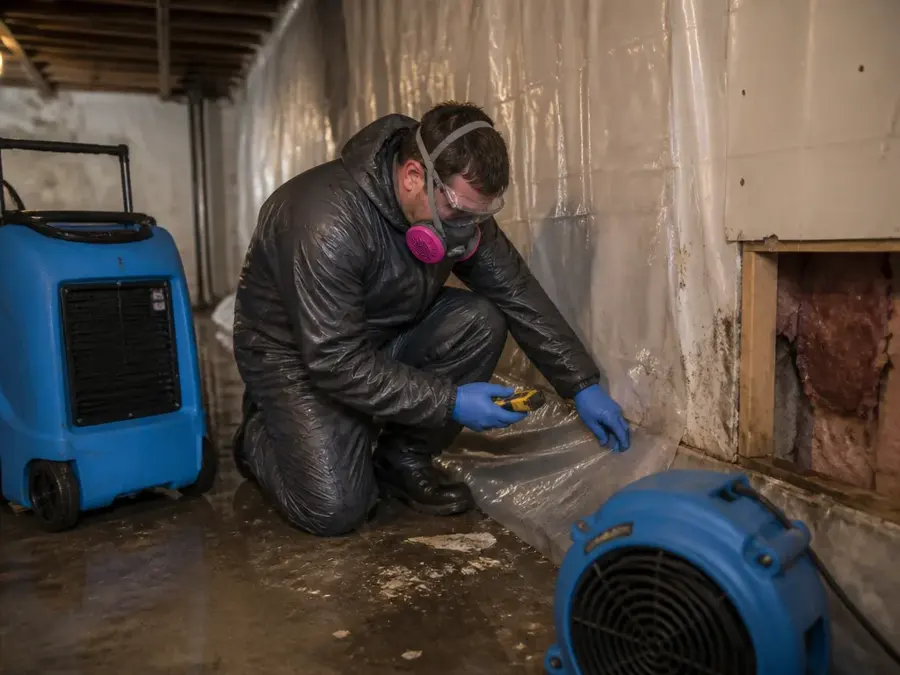
The crew starts with containment and extraction, then moves to removal of what cannot be cleaned.
The first visit is as much about documentation as pumping. Moisture readings and photos set the baseline for the whole job.
Extraction and removal
Truck-mounted extraction pulls standing water before it wicks into drywall and pad. See emergency water extraction for how that step works.
Wet carpet, pad and drywall that touched sewage are cut out and bagged, because they cannot be cleaned to a safe standard.
Cleaning and drying
Hard surfaces are cleaned and treated. Air movers and dehumidifiers then dry framing and the slab to a target reading.
The full process for a drain or lateral backup is on the sewer backup cleanup page.
Details worth writing down early
The restoration team asks a few plain questions at the start, and the answers shape the plan. Having them ready saves time on a stressful day.
Which drain backed up first tells the team where the blockage probably sits. If only the basement drain is affected, the problem is usually the lateral, not a fixture upstairs.
- When the first sign appeared and which fixture was running.
- Whether the water came from one drain or several.
- How deep the water got and how far it spread across the floor.
- What is stored on the floor, such as boxes, furniture and appliances.
- Whether the basement is finished, with carpet, drywall or trim.
Backflow valves and the insurance question
City of Bellevue Public Works recommends a backflow prevention valve on the lowest drains. A valve lets wastewater leave the house but closes against water trying to come back.
The same city information notes that sewer backup usually needs a special insurance rider. A standard homeowners policy may not pay for it, so check the policy with your own insurer.
- Photograph the drain, the water marks on the walls and every damaged item before anything is moved.
- Write down a list of what was in the basement, with rough ages.
- Keep receipts for any emergency work.
- Ask the insurer in writing what the policy says about sewer or drain backup.
Preventing the next backup
Once the basement is dry, the cause still has to be found. A plumber can camera the lateral and clear roots or grease.
A backflow prevention valve is the item the city specifically points to for the lowest drains.
Keeping wipes, grease and paper towels out of the drain does more than most owners expect. The basement flood cleanup page explains what drying looks like if water does return.
Questions
Is sewer backup water dangerous?
Yes. It is treated as Category 3 water, so it can carry bacteria and other contamination. People and pets should stay out until it is removed.
Who is responsible for the sewer lateral in Bellevue?
The lateral from the house to the main is the owner's responsibility. City of Bellevue Public Works handles the wastewater system beyond that.
Will insurance cover a sewer backup?
Coverage depends on the policy. The city notes that sewer backup usually needs a special rider, so check with your own insurer before assuming anything.
Can the carpet be saved after a sewer backup?
Usually not. Porous materials that touched Category 3 water, such as carpet, pad and drywall, are normally removed rather than cleaned.
What does a backflow prevention valve do?
It lets wastewater flow out of the house and closes if water tries to flow back in. The city recommends one on the lowest drains.
How long does the cleanup take?
It depends on how much water came up and how finished the basement is. A bare slab dries faster than a finished space with carpet, pad and drywall, and the team checks readings until the structure reaches the goal.
Does a backup happen only after a flood?
No. A blocked lateral can back up on a dry day. Heavy rain or high water can add to it, but a clog from roots, grease or wipes is enough.