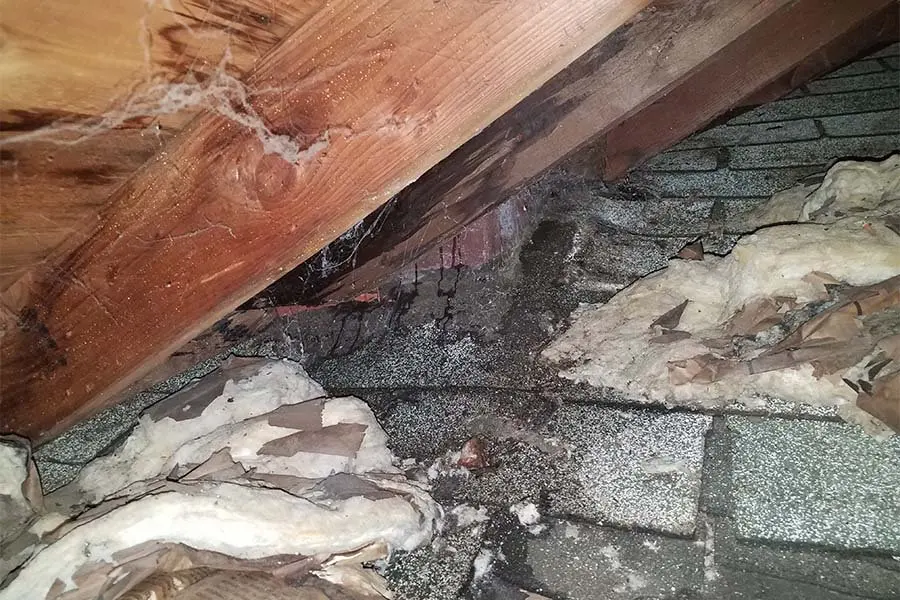
After a hailstorm or a hard wind, the first sign of a roof problem is often not on the roof at all. It is a small brown stain on a ceiling, and it can mean a lot of water has already gone where nobody can see.
Key takeaways
- A stain on a ceiling after a storm usually means water has been in the attic or the ceiling cavity for some time.
- Bellevue had hail and wind on June 25, 2024, and a tornado in the Hyda Hills and Willow Lake area on June 16, 2017.
- An opening is tarped first, then wet insulation and drywall are removed, and the framing is dried to a reading.
- A bulging ceiling can hold a lot of water and can fall, so keep people out from under it.
- Roof repair and water cleanup are separate jobs, and both are needed.
Storms that have tested Bellevue roofs
Bellevue has had more than one storm that put roofs to the test. A tornado crossed the Hyda Hills and Willow Lake area on June 16, 2017, and hail and wind hit the city on June 25, 2024.
The housing stock matters too. The median Bellevue home was built in 1982, and Fontenelle Hills was built mostly from the late 1960s to the early 1980s in ranch, split-entry and tri-level styles.
- Older roofs can have worn shingles, brittle flashing and aging vents.
- Hail can bruise shingles without making a visible hole.
- Wind can lift a shingle edge or tear a ridge cap.
- Newer subdivisions such as Tregaron and Twin Ridge can also be hit.
What a ceiling stain really means
A stain is the end of a long path. Water enters the roof, runs along the decking or rafters, soaks insulation and then reaches the drywall.
By the time it shows, the attic may already be wet. A small stain can hide a large wet area above it.
Signs that point to the roof
The stain appears after rain or wind and is near an exterior wall, a vent or a chimney. It may grow during a storm and dry out later.
The room may smell musty even when the ceiling looks fine.
Signs that point to a pipe
A stain that grows on a dry day or sits under a bathroom or laundry is more likely a plumbing leak.
That case is covered on the Bellevue ceiling leak water damage page.
What to do right away
Safety first. A wet ceiling can fall, and wet insulation is heavy.
Then reduce the water that is entering and the water that is already in.
If the ceiling is dripping heavily, a small hole through the lowest point of the bulge lets the water drain into a bucket instead of releasing all at once. If this feels unsafe, leave it for the crew.
- Keep people and pets out from under a bowed ceiling.
- Put a bucket under any drip and move furniture away.
- Turn off power to the room if water is near a fixture and it is safe to reach the panel.
- Do not climb on a wet or damaged roof.
- Photograph the stain, the ceiling and any visible roof damage from the ground.
Tarping the opening
The first repair is temporary. A tarp keeps more water out until a roofer can fix the roof.
The restoration team can tarp an opening so water stops entering the house, which protects the work done inside. The Bellevue roof leak water damage page describes the process.
- A tarp is secured over the opening and past the edges.
- Debris is cleared so the cover sits flat.
- Photos are taken before and after.
- A roofer is still needed for the real repair.
Wet attic insulation and the ceiling below
Wet insulation holds water against the ceiling drywall. It has to come out, because it will not dry quickly and it keeps feeding moisture into the cavity.
The crew pulls wet insulation and opens the ceiling only where readings show water. Drywall that has sagged or stained through is removed.
Mold can start if wet material stays in place, which is one reason for acting quickly.
The water usually travels farther than the stain suggests. It follows rafters and drywall seams, so a stain in one corner can mean a wet attic across the whole room.
- Wet insulation is bagged and removed.
- Sagging drywall is cut out safely.
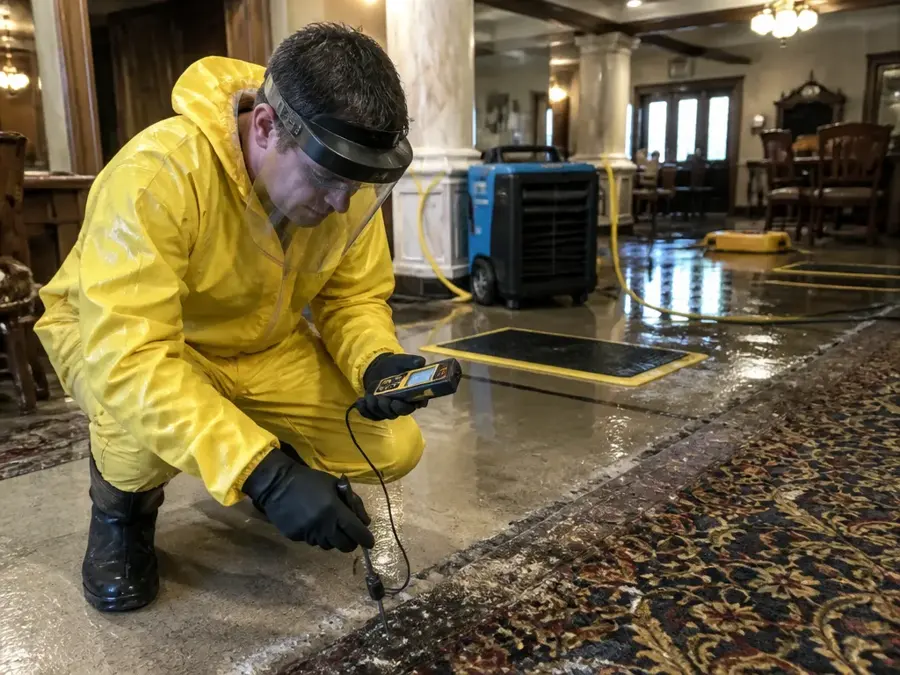
- Framing and roof decking are checked with a moisture meter.
- Contents below are moved or covered.
Drying the framing and the rest of the house
Once the wet material is out, air movers and dehumidifiers dry the framing. Structural drying is measured with readings, not by how a surface feels.
Walls below a roof leak are checked too, because water can run down a stud bay and wet the wall far from the ceiling.
Light fixtures and ceiling fans in a wet ceiling are checked before power is restored, since water can sit inside them.
Insurance, roofers and the claim file
Storm damage claims usually involve both the roof and the water damage inside. Coverage depends on the policy, so check with your own insurer.
A good file connects the storm to the loss.
Keep the claim paperwork in one folder. Estimates, photos and messages are easy to lose in the weeks after a storm.
- The date of the storm and photos of any roof damage.
- Dated photos of the ceiling stain and the attic.
- A written note of when the water was first noticed.
- Receipts for tarping and emergency work.
- The roofer's written estimate for the repair.
Questions
Can hail damage a roof without leaving a hole?
Yes. Hail can bruise or crack shingles so they leak later, even when the roof looks fine from the ground.
What should I do first when I see a ceiling stain after a storm?
Keep people away from a bowed ceiling, catch any drips, photograph the damage and get the opening covered so more water does not enter.
Does the water damage crew fix the roof?
The restoration team can tarp an opening and dry the house. A roofer does the permanent repair.
Why does wet attic insulation have to be removed?
It holds water against the ceiling and dries slowly. Leaving it in place keeps the drywall and framing wet.
Will insurance cover storm roof damage?
That depends on the policy. Ask your insurer, and give them dated photos and the storm date.
How can I tell a roof leak from a plumbing leak?
A stain that appears after rain or wind and sits near an exterior wall or vent points to the roof. A stain that grows on a dry day or sits under a bath or laundry points to a pipe.